Are Sausages Gluten-Free?
If you’re newly gluten‑free, or you’ve been gluten‑free for years and still miss your old favourite breakfasts, BBQs, or Sunday fry‑ups — you might be wondering whether sausages are gluten-free and safe to eat. It’s a really common question, especially because regular sausages made from meat look naturally gluten‑free, yet many brands still contain hidden gluten, which makes things a little tricky to navigate!
Let’s clear it up simply.
Disclaimer: EGFH shares general gluten‑free guidance based on personal experience and does not make any warranties of any kind. This content is not medical advice. Product ingredients and allergen statements can change, so always check packaging before eating. All food is consumed at your own risk, and the author bears no responsibility, nor assumes any liability, for any outcomes resulting from use of the information on this site.
Are Sausages Gluten-Free?
No — many regular sausages are not gluten‑free. Even though sausages are made from meat, lots of brands add gluten‑containing ingredients such as:
- Wheat rusk.
- Breadcrumbs.
- Barley malt extract.
- Seasoning mixes (that are not gluten-free).
These ingredients help bind the sausage, improve texture, and reduce cost — but they make the sausage unsafe for anyone with coeliac disease, gluten intolerance, or gluten sensitivity.
Why Wheat Makes Sausages Unsafe
Many traditional sausages use wheat rusk as a filler. Wheat rusk is simply dried, ground wheat — and wheat contains gluten.
Gluten is a protein that causes gut damage in people with coeliac disease and can also trigger symptoms in those with gluten intolerance or gluten sensitivity. Because of this, any sausage containing wheat rusk, breadcrumbs, or barley malt extract is automatically unsafe for gluten‑free diets.
If the ingredients list says wheat, barley, rusk, breadcrumbs, or malt extract, it’s not gluten‑free.
If you’re gluten‑free, you must avoid sausages containing wheat, barley, or rye and choose certified gluten‑free sausages instead.
So What Can You Eat Instead?
The good news is that there are now excellent gluten‑free sausages available — and they taste just as good (if not better) than regular ones. Here are some reliable options:
🇬🇧 UK Options For Gluten‑Free Sausages
- Heck Gluten‑Free Sausages — clearly labelled GF, widely available in supermarkets.
- The Black Farmer Gluten‑Free Sausages — premium, high‑meat content, certified GF.
- Supermarket Free‑From Ranges — Aldi, Tesco, Sainsbury’s, Asda, and M&S all offer gluten‑free sausages.
These brands avoid wheat rusk and use gluten‑free binders such as rice flour or potato starch instead.
🇺🇸 US Options For Gluten-Free Sausages
Many US sausages are naturally gluten‑free, but always check labels. Brands like Aidells and Applegate frequently offer gluten‑free options, and several Johnsonville varieties are gluten-free, but always confirm each flavour, as recipes vary.
🇦🇺 Australia Options For Gluten-Free Sausages
Australia has strong allergen labelling laws, and gluten‑free sausages are widely available. Cleaver’s Organic and supermarket GF ranges (Coles/Woolworths) are reliable options, and always look for clear “gluten‑free” labelling.
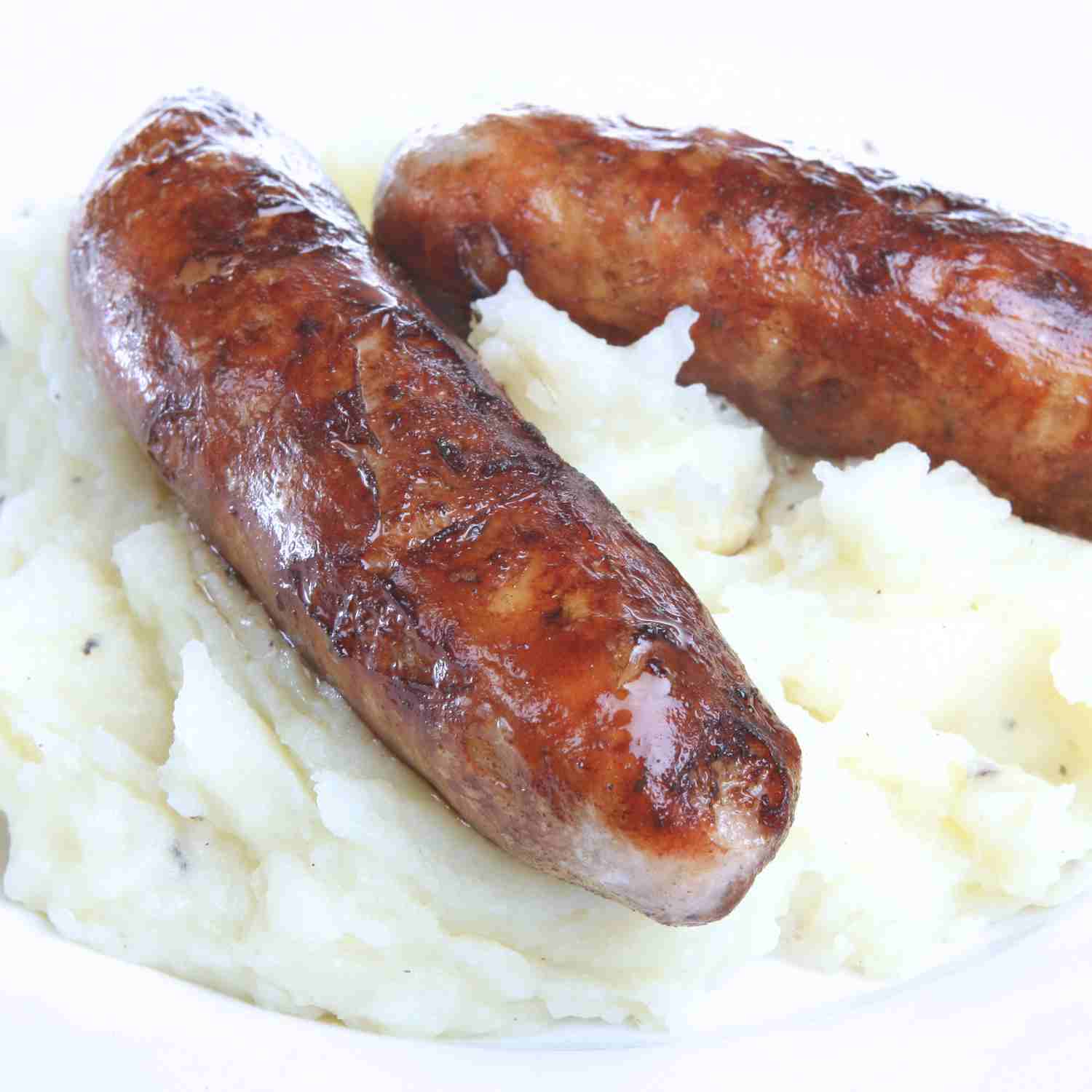
What Makes Sausages Gluten-free?
A gluten-free sausage must:
- Contain no wheat, barley, rye, or oats.
- Use a gluten‑free binder (such as rice flour, potato starch).
- Be labelled gluten‑free or no gluten‑containing ingredients.
- Ideally be made in a dedicated gluten‑free facility (varies by brand).
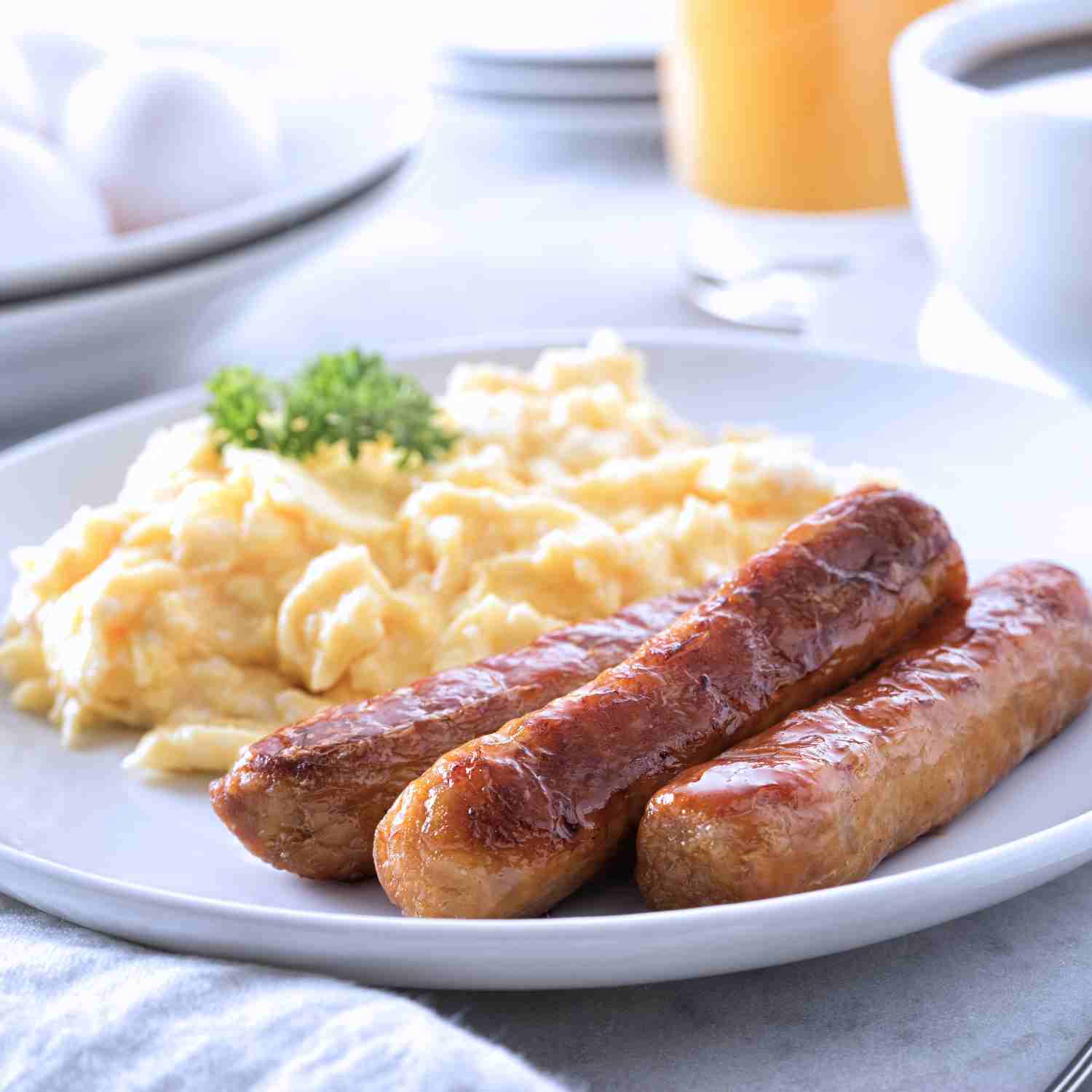
How To Enjoy Your Gluten-Free Sausages
Gluten‑free sausages are incredibly versatile. Here are a few easy, everyday ideas:
- With scrambled eggs for a simple breakfast.
- In a gluten‑free sausage sandwich with mustard.
- Chopped into gluten-free pasta or risotto.
- Baked with vegetables for a quick traybake.
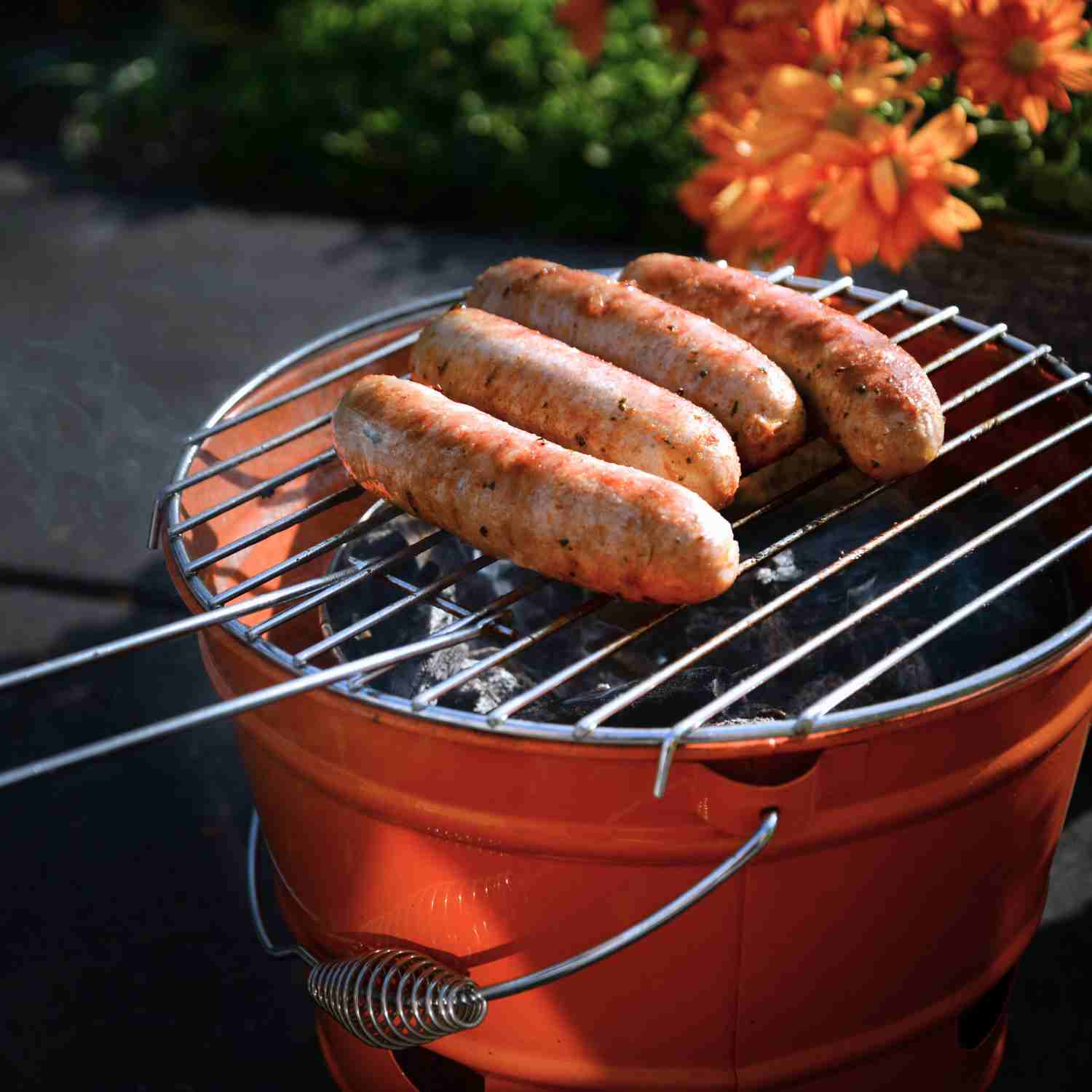
- Grilled on the BBQ with gluten‑free buns.
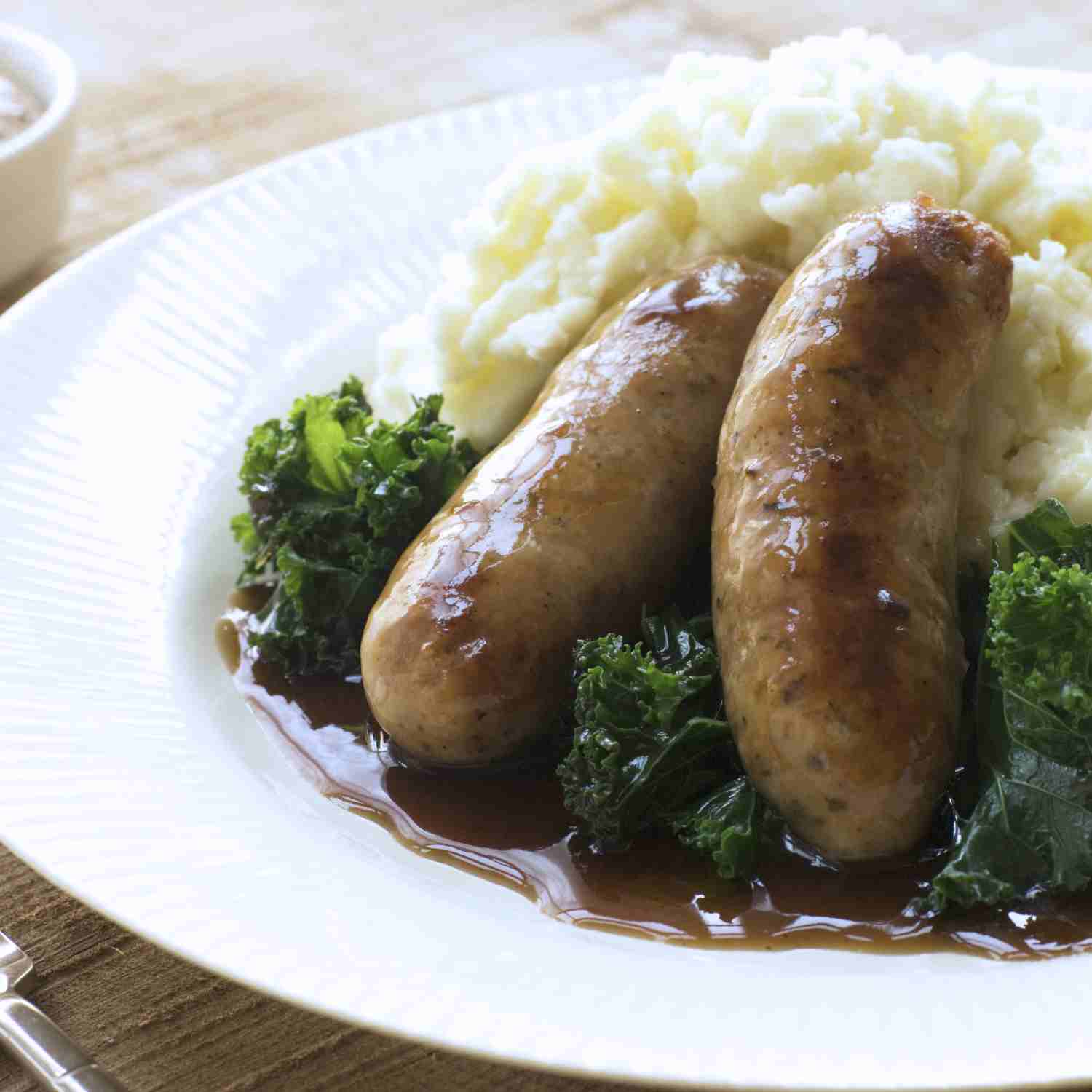
- Served with mashed potatoes and peas (my favourite).
They’re an easy, affordable protein source — and therefore perfect for busy days.
Tips For Eating Out
Eating sausages at home is easy once you know which brands are safe — but eating out or going to a BBQ can be trickier. Sausages often pick up gluten through cross‑contamination, shared utensils, or even marinades. So here’s how to stay safe without feeling awkward or stressed.
⭐ Eating Out (Cafés, Pubs, Restaurants)
- Ask what’s in the sausage — because catering sausages often contain wheat rusk.
- Check the allergen menu — UK restaurants must list wheat and gluten clearly.
- Ask about cross‑contamination — shared grills are common.
- Choose places with GF protocols — so you feel safe to eat out.
- Go for naturally GF alternatives like bacon, eggs, grilled chicken, or steak.
TOP TIP
If the staff aren’t sure what’s in the sausage, don’t order it — avoid it.
🔥 Going to a BBQ (Friends, Family, Parties)
- Take your own gluten‑free sausages.
- Wrap them in foil before cooking to avoid gluten from the grill.
- Ask for a clean section of the grill, or alternatively, cook yours first.
- Avoid shared tongs — you could even take your own small set.
- Watch out for marinades and sauces, because these can have hidden gluten.
- Keep GF buns separate from regular ones.
NOT SURE WHAT TO SAY?
A simple “I’ve brought my own gluten‑free sausages — could I pop these on first?” works beautifully.
🧺 Picnic & Outdoor Events
- Keep everything sealed to avoid crumbs.
- Pre‑cook your sausages at home and take them cold.
- Pack GF rolls separately.
- Take safe condiments — mustard, ketchup, mayo are usually GF, but always check the ingredients list first.
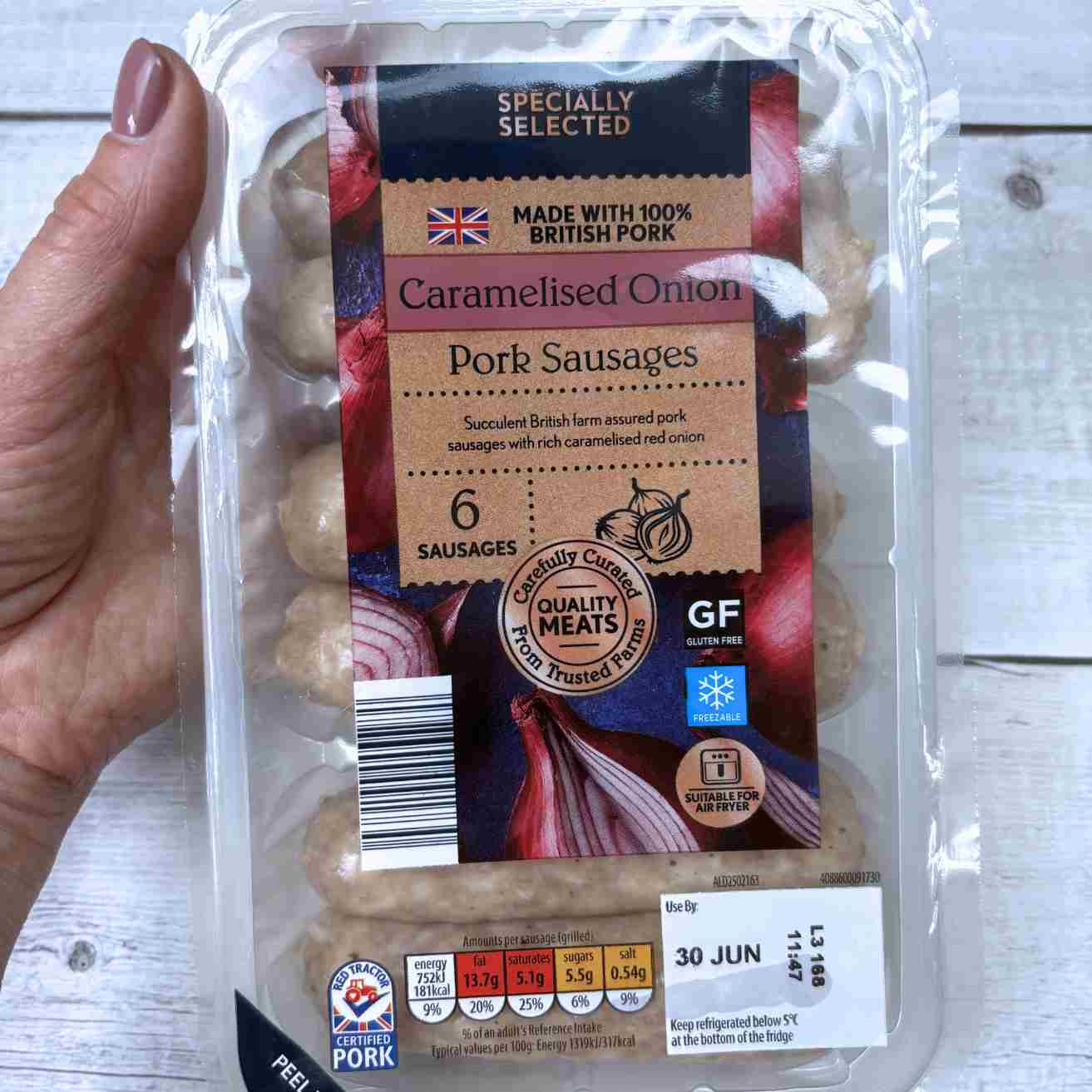
How To Check Sausages for Wheat and Gluten
Always read the ingredients list carefully. Look out for:
- Wheat rusk.
- Breadcrumbs.
- Barley malt extract.
- Malt vinegar.
- “Cereal” (often wheat).
- “Seasoning” (if not specified, check the allergen list).
If the packaging says contains wheat, contains barley, or contains gluten, it’s not safe.
If it says gluten‑free, no gluten‑containing ingredients, or has a certified GF logo, you’re good to go.
2
servings40
minutes40
minutes1200
kcalCalories are an approximation and should only be used as a guide.
Ingredients
6 gluten-free sausages
2 – 3 medium-sized potatoes
1/2 – 1 cup of milk or cream (or preferred non-dairy alternative)
2 – 3 tablespoons of butter
Salt and pepper for seasoning
Gluten-free gravy granules
Chosen vegetable (peas or mixed veg)
Directions
- Cook sausages according to manufacturers instructions – usually 30-35 minutes are needed to fully cook, on 190°C for 30–35 minutes, turning halfway.
- Whilst sausages are cooking, make your mashed potato as follows:
- Peel and chop the potatoes into small, even chunks. Boil in salted water for 15-20 minutes until soft.
- Drain potatoes well, then mash with butter and milk until smooth and fluffy. Season generously with salt and pepper.
- When you turn your sausages half-way, start cooking your vegetables for 10-15 minutes. (f you are using microwave veg, then you can cook these just before plating up.
- Plate up your mash, add the sausages and veg, and finish with gluten‑free gravy.
Final answer: Are Sausages gluten‑free?
No — regular meat sausages are not gluten‑free because they contain wheat, rusk, breadcrumbs, or barley, making them unsafe. To stay gluten‑free, choose sausages that are clearly labelled gluten‑free and always check the ingredients list.
About Lynne from Easy Gluten-free Hub
I’ve been gluten free for nearly twenty years and I’m all about simple, everyday meals that fit real life. I’m here to help you enjoy gluten‑free meals without the stress. You can read more about me here.